Comparative Policy Laboratory (COMPLAB)
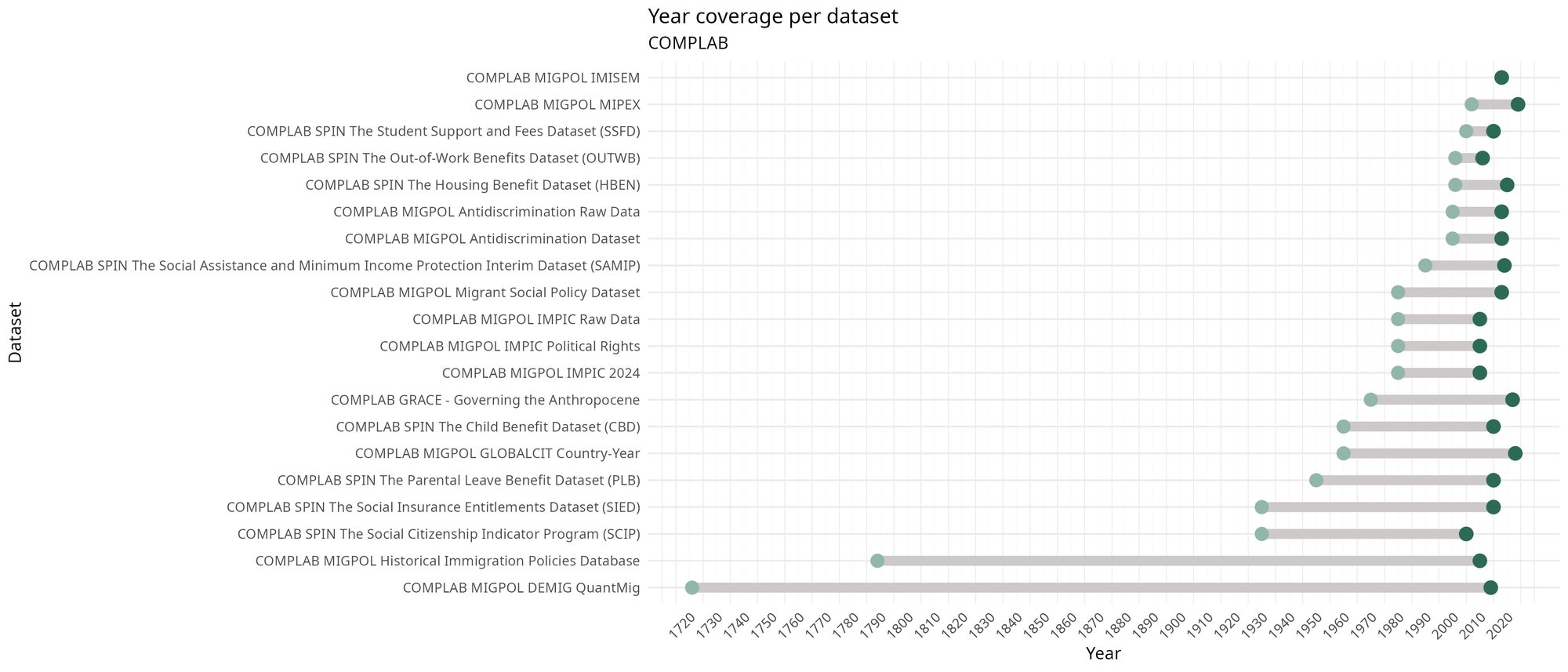
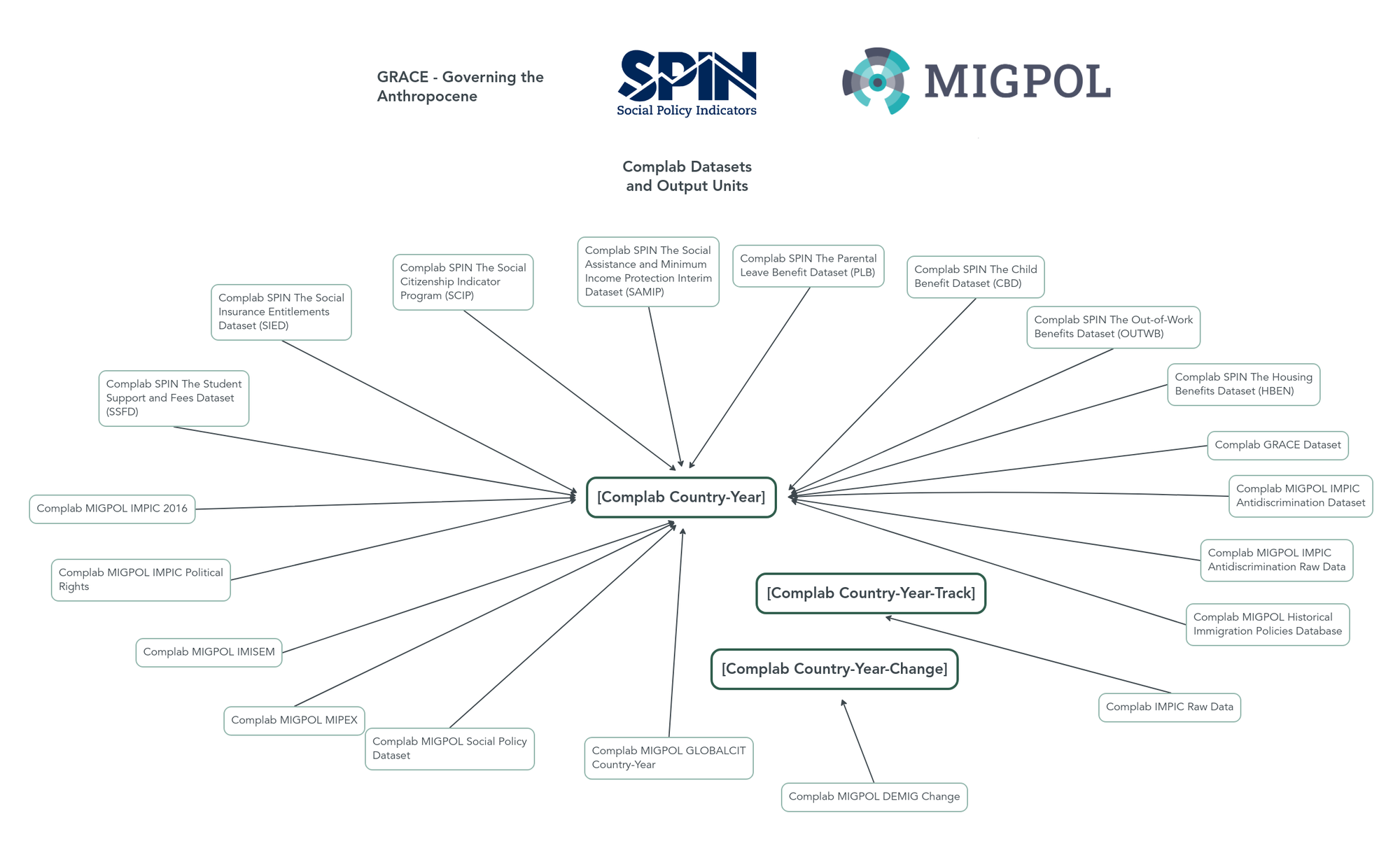
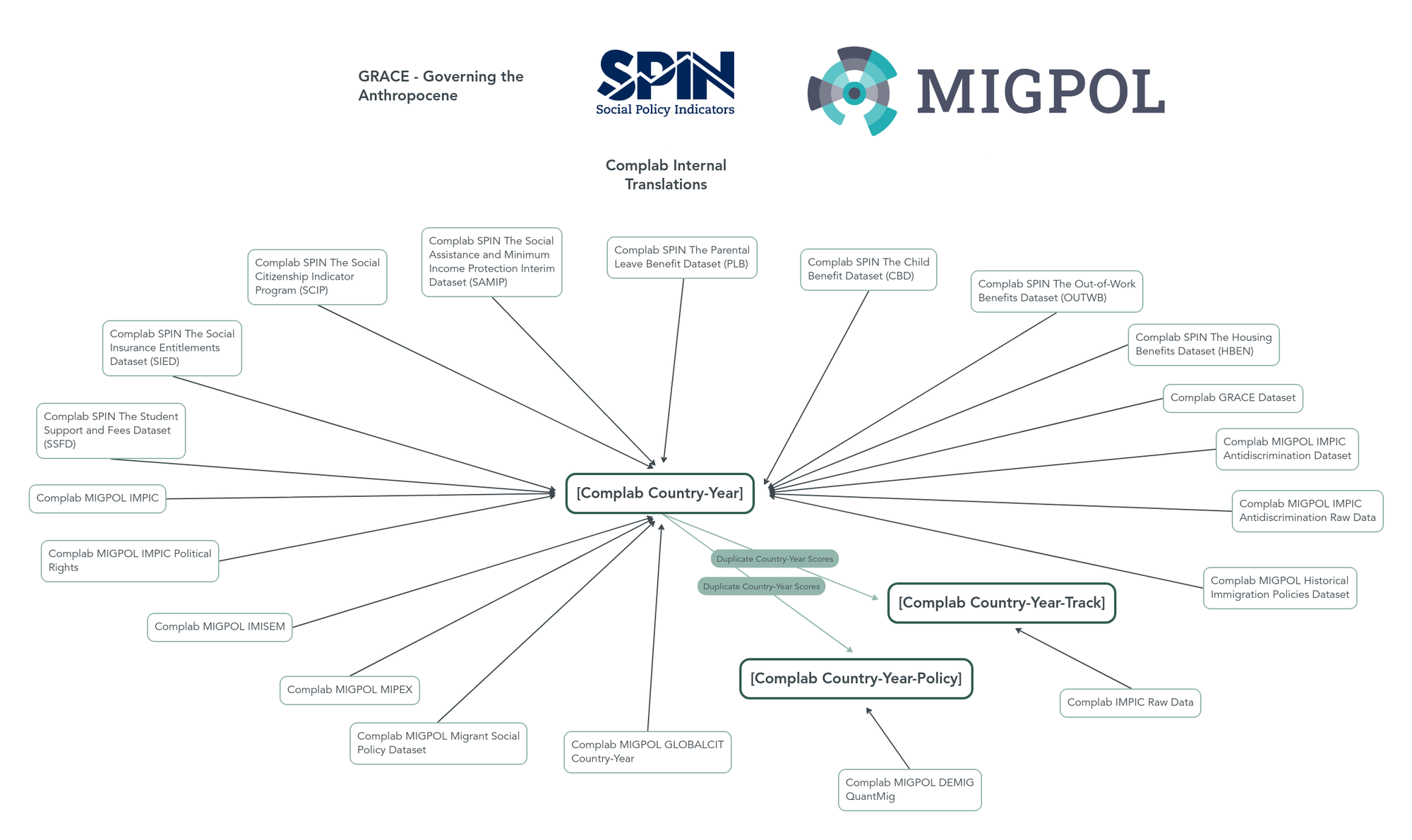
The Comparative Policy Laboratory (COMPLAB) is a research infrastructure run in collaboration between Stockholm University and Uppsala University, that provides vital policy data across three different policy strands: environmental-, social-, and migration policy.
The Social Policy Indicators (SPIN)
Building on T.H. Marshall’s ideas about social citizenship, SPIN makes available comparative data on social rights and duties of citizens, thereby moving research beyond analyses of welfare state expenditures. The SPIN database is instead oriented towards analyses of institutions as manifested in social policy legislation. Data are carefully collected in a coherent and consistent methodological manner to facilitate quantitative research of social policy across time and space. To date, SPIN covers 36 countries, of which several have data on core social policy programs from 1930 to 2019.
Governing the Anthropocene – Environmental Policy and Outcomes in a Comparative Perspective (GRACE)
The GRACE project addresses two central questions in the study on environmental governance: 1) Which factors explain cross-national differences in environmental policy outputs, and 2) Are environmental policy outputs linked to reductions of environmental harm? By compiling a data set of longitudinal and comparative environmental policy outputs in 38 countries for the period 1970-2010, this project will be able to address fundamental questions about society’s ability to respond to environmental problems, as well as provide evidence-based policy advice on the relative strengths and weaknesses of different policy instruments.
The Migration Policy Database (MIGPOL)
The Migration Policy Database (MIGPOL) is a comprehensive open-access data infrastructure for scholars and students who are interested in the ways public policies intersect with the movement of individuals across international borders. It brings together the most advanced and academically rigorous projects in this area of research and makes their data available and easily accessible. MIGPOL’s core ambition is, in other words, to “assemble – rather than reinvent – the wheel” (Helbling & Solano 2021) of comparative migration policy research.